When was the last time you had your eyes checked? If it’s been a while, you might be wondering what to expect during your next appointment. A comprehensive eye exam involves much more than reading letters on a chart. It’s an opportunity to check your vision, assess your eye health, and identify potential problems before they affect your daily life.
At Maine Optometry, we combine advanced diagnostic technology with personalized care to make every appointment thorough, comfortable, and informative. Here’s what happens during a comprehensive eye exam, from the moment you arrive to your final recommendations.
Step 1: Reviewing Your Medical and Vision History
Your appointment begins with a conversation about your vision, general health, and any concerns you’ve noticed.
Your eye doctor or a member of our team may ask about your current glasses or contact lenses, medications, family medical history, and symptoms such as blurry vision, headaches, or eye discomfort.
This information helps us identify potential risk factors and determine which tests may be appropriate for your needs. For example, patients with diabetes may require additional attention to their retinal health, while children may need testing specific to their developing eyes.
Step 2: Pre-Testing and Advanced Eye Measurements
Before meeting with your optometrist, you’ll typically undergo several preliminary tests to gather information about your eyes.
At Maine Optometry, we use advanced diagnostic equipment to evaluate your vision and eye health. Depending on your needs, testing may include:
- Autorefraction: Estimates your vision prescription by measuring how light travels through your eyes.
- Corneal topography: Maps the surface of your cornea to identify irregularities that may affect your vision.
- Optos® retinal imaging: Captures detailed images of your retina, helping our doctors identify potential signs of eye disease.
- Eye pressure testing: Measures the pressure inside your eyes, an important part of assessing glaucoma risk.
Not every patient needs every test. Your optometrist will determine which assessments are appropriate based on your health history and examination findings.
Step 3: Checking Your Visual Acuity and Prescription
Next comes one of the most familiar parts of a comprehensive eye exam: the vision chart.
Your optometrist will assess how clearly you see at different distances, both with and without your current prescription when appropriate.
You’ll also undergo a refraction test, which helps determine the prescription needed for your glasses or contact lenses. During this process, your eye doctor may ask which of two lens options looks clearer.
These measurements help us identify nearsightedness, farsightedness, astigmatism, and age-related focusing changes.
Step 4: Examining Your Eye Health
Clear vision doesn’t necessarily mean your eyes are healthy. Some eye diseases develop gradually and may not cause noticeable symptoms in their early stages.
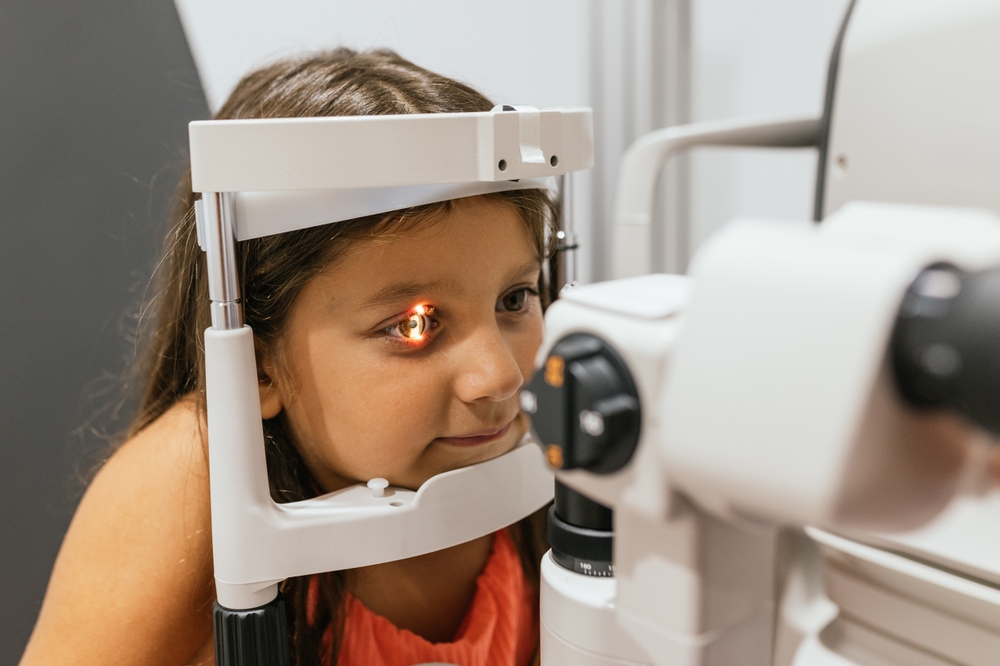
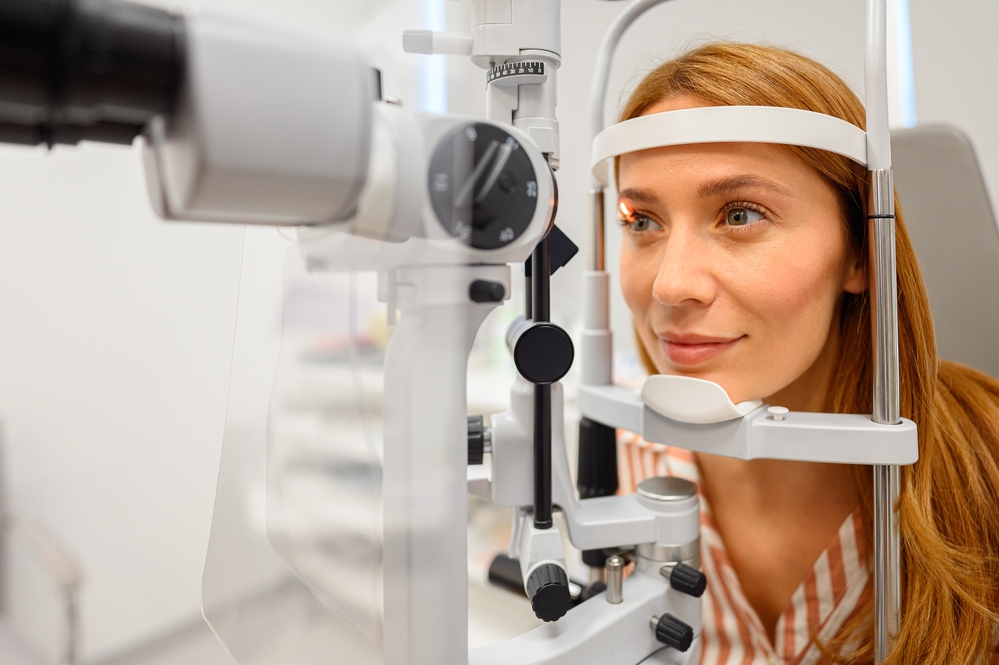
During your comprehensive eye exam, your optometrist examines important structures, including your cornea, lens, retina, and optic nerve.
At Maine Optometry, our diagnostic technology may include optical coherence tomography (OCT), which produces detailed cross-sectional images of retinal structures.
These examinations can help identify signs of conditions such as:
- Glaucoma: Damage to the optic nerve that can lead to permanent vision loss.
- Cataracts: Clouding of the eye’s natural lens that can make vision blurry.
- Age-related macular degeneration (AMD): Damage affecting the central portion of your retina.
- Diabetic retinopathy: Changes to retinal blood vessels associated with diabetes.
Your doctor may also recommend pupil dilation or additional testing when a closer examination is necessary.
Step 5: Discussing Your Results and Recommendations
Once testing is complete, your optometrist will review the findings and explain what they mean for your vision and eye health.
If your prescription has changed, we’ll discuss your eyewear options. Maine Optometry offers an extensive selection of eyeglasses, sunglasses, and contact lenses, with knowledgeable opticians available to help you find a comfortable fit.
If your exam reveals signs of an eye condition, your doctor will discuss appropriate next steps. These may include further testing, a personalized management plan, or a referral for additional care.
We’ll also recommend when to schedule your next exam based on your age, eye health, and individual risk factors.
Frequently Asked Questions About Comprehensive Eye Exams
How Long Does a Comprehensive Eye Exam Take?
A comprehensive eye exam often takes approximately 30–60 minutes, although appointment length varies depending on the tests required. Additional testing or pupil dilation may extend your visit.
Does a Comprehensive Eye Exam Hurt?
Most comprehensive eye exam tests are painless. You may experience temporary brightness from examination lights or mild discomfort during certain tests. If your pupils are dilated, your vision may remain blurry and sensitive to light for several hours.
How Often Should You Get a Comprehensive Eye Exam?
The appropriate frequency depends on your age, medical history, symptoms, and risk factors. Your optometrist can recommend an examination schedule that fits your needs.
Schedule Your Comprehensive Eye Exam at Maine Optometry
Your eyesight deserves more than a quick vision screening. At Maine Optometry, our experienced team takes the time to assess your eye health, explain your results, and recommend care suited to your needs.
Whether you’re updating your prescription or checking for early signs of eye disease, we’re here to help you protect your vision. Schedule your comprehensive eye exam at Maine Optometry today.